

Ask a business owner what their accountant does and they'll usually give you a reasonably clear answer. Ask what their SEO agency does, and the answer is often some version of "optimising the website," followed by a slightly uncertain pause. That pause isn't a failure of understanding. It's usually a sign that the agency has never actually explained it clearly, and the invoice kept arriving anyway.
This is one of the quieter problems in the SEO industry. It's not always about being lied to or overcharged in an obvious way. It's about a service that, by its nature, is hard to see happening — nobody hands you a finished product at the end of the month the way a printer or a caterer would. Without deliberate transparency from the agency's side, that invisibility can continue for years, with the business owner assuming "it must be working, since they keep sending invoices and reports."
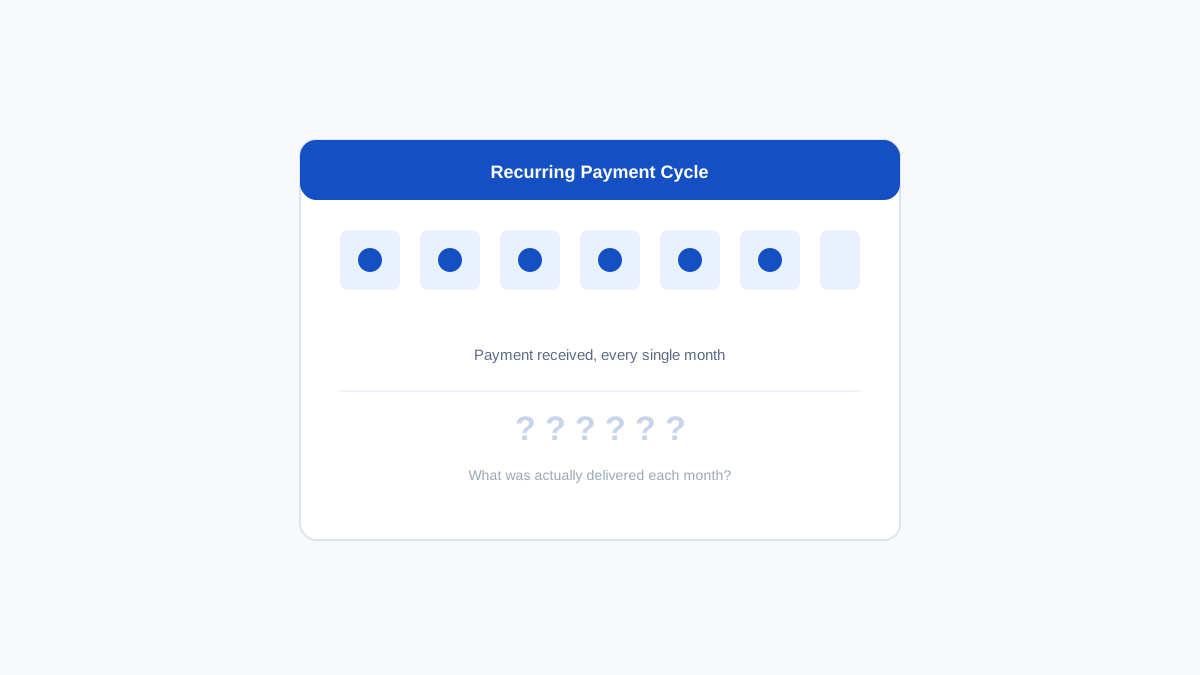
What makes this particularly easy to overlook is that the invoice itself feels like proof of activity. Payment goes out, a PDF comes back, the relationship continues. Nothing about that sequence forces anyone to stop and ask whether the actual content of that PDF has ever meaningfully changed from one month to the next, or whether it would hold up if you handed it to an independent expert and asked, "does this represent a reasonable month of work for this fee?"
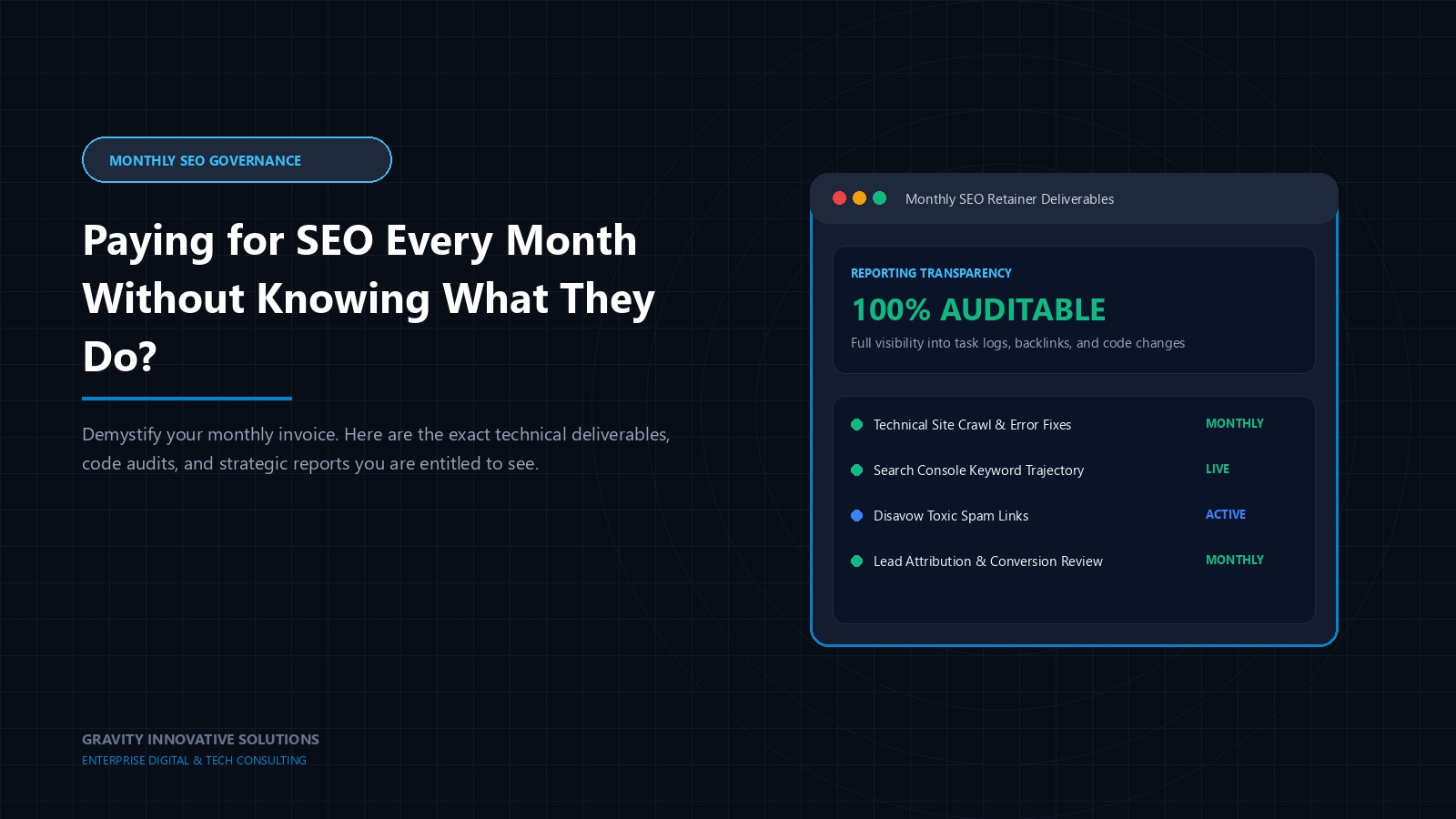
A report that's hard to pin down in specifics is a report that's hard to hold accountable.
Why This Matters More Than It Seems
Opacity isn't automatically a sign of dishonesty, but it is the one condition that lets genuine underperformance hide indefinitely. If you can't tell what's being done, you also can't tell whether it's being done well, done at all, or done at the pace promised. Over a year, that uncertainty can quietly cost thousands in fees for work that may be thin, misdirected, or simply not happening at the scale it should be.
There's a second, less obvious cost: strategic drift. SEO decisions should evolve as your business, competitors and the search landscape change. An agency that isn't required to explain its reasoning in detail to you each month has less pressure to actually keep that reasoning sharp internally either. Vague reporting and vague strategy tend to travel together.
Why Agencies Sometimes Stay Vague, Even Without Bad Intent
It's worth separating two very different situations that look identical from the outside. In one, an agency is deliberately under-delivering and using vague language to avoid being caught. In the other, far more common situation, an agency genuinely is doing reasonable work, but its internal reporting process was never built with client clarity as a priority — account managers summarise technical work in generic templates because that's simply how the agency has always done it, not because anyone is trying to hide anything.
Both situations produce the same symptom: a report you can't fully make sense of. But they call for different responses. The first calls for a serious conversation about whether the relationship should continue at all. The second often resolves quickly once you simply ask for more specificity, because there was never any resistance to giving it — nobody had asked before.
Common Mistakes Businesses Make Here
- Accepting "SEO takes time" as a permanent explanation. It's true early on. It stops being a sufficient answer after many months with no specifics to show for it.
- Never setting reporting expectations upfront. If the format and content of monthly reports weren't agreed at the start, agencies default to whatever is easiest for them to produce, not what's most useful to you.
- Treating technical jargon as proof of competence. Genuine expertise can almost always be explained simply. Confusing language is sometimes a smokescreen, not a sign of depth.
- Not comparing reports against your own Analytics. A report is, after all, written by the party being evaluated. Your own data is the independent check.
- Avoiding the awkward conversation. Many business owners stay quiet about confusion out of politeness, which only extends the problem further.
What a Proper Monthly SEO Cycle Actually Looks Like
Legitimate SEO work follows a fairly consistent rhythm: research into what's working and what isn't, on-page and content fixes based on that research, authority-building activity, and then a report that connects all of it back to real numbers before the cycle repeats with adjustments. If your agency's monthly activity can't be mapped onto something like this, that's worth asking about directly.
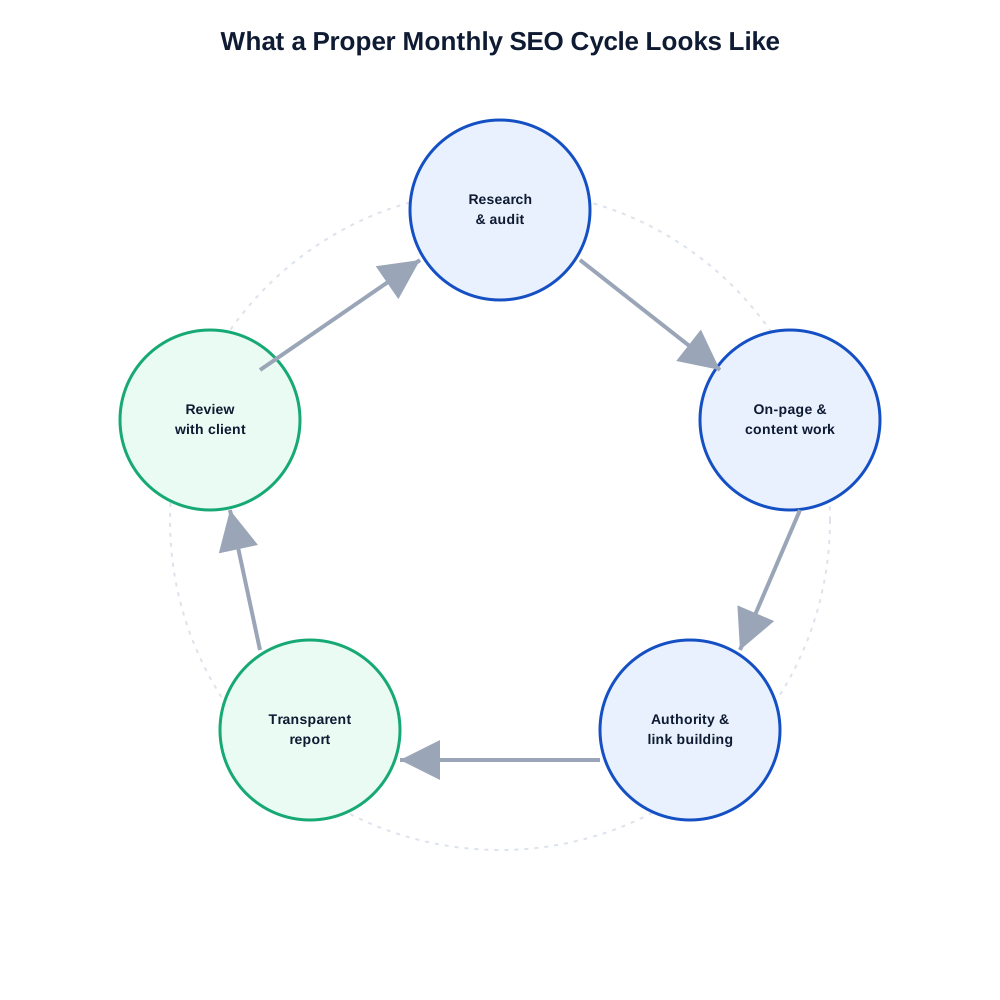
Each stage should be visible to you, at least in summary, every single month.
What a Transparent Report Should Actually Include
A useful report doesn't need to be long or overly technical. It needs to be specific and tied to outcomes you actually care about.
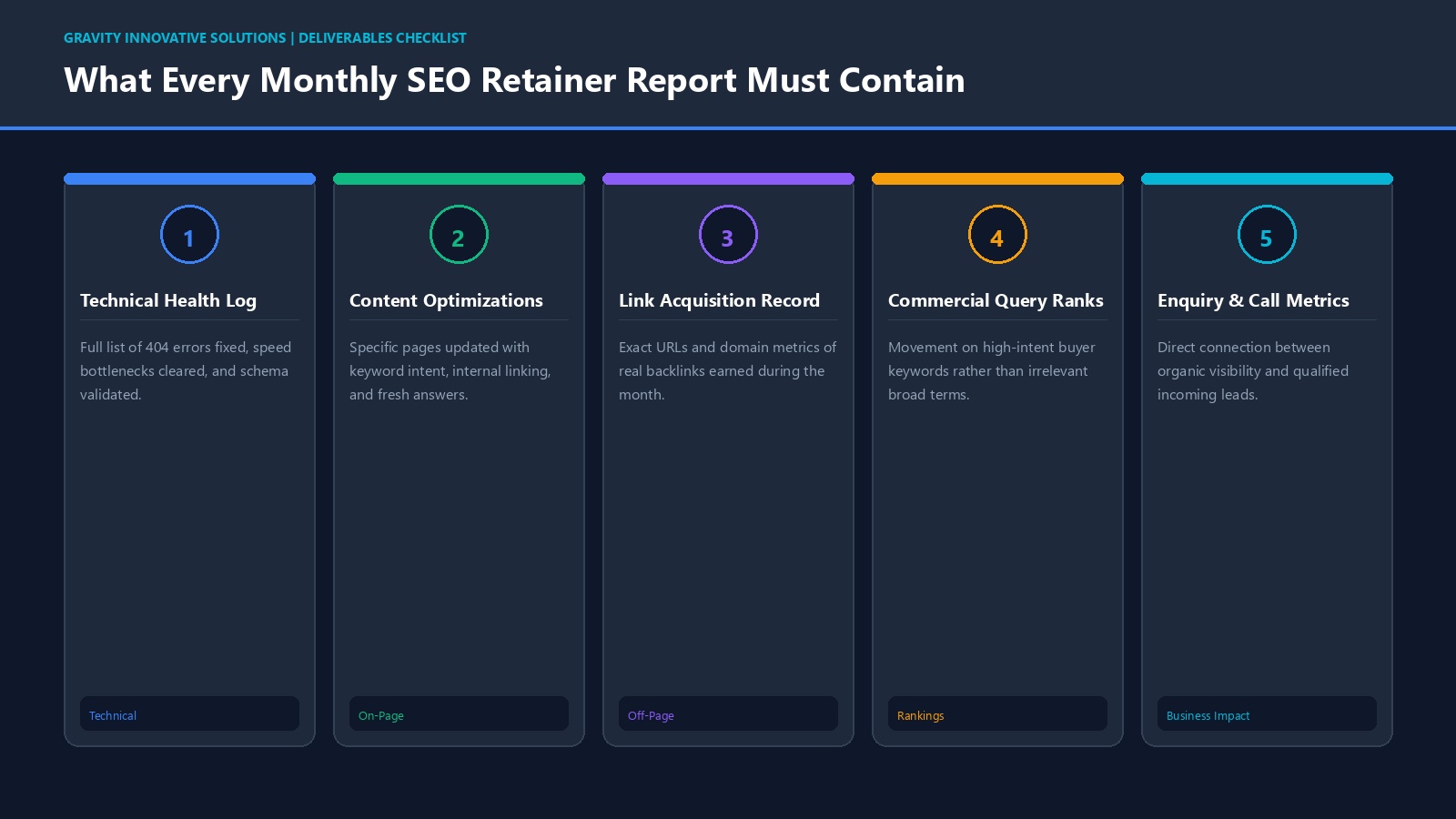
If your current report is missing more than one or two of these, it's a reasonable starting point for your next conversation.
An Illustrative Scenario
Consider a small accounting firm — illustrative, not a specific client — that had been paying a fixed monthly SEO fee for close to three years. The reports always arrived, always looked professional, and always said some version of "ongoing optimisation activities carried out as planned." When a new marketing-savvy hire joined the firm and asked to see the actual task list behind that sentence, the agency took over a week to respond, and the eventual answer amounted to a handful of minor text edits spread across the entire quarter. The firm wasn't being actively scammed in a legal sense. They were paying premium-service pricing for what turned out to be occasional, low-effort maintenance, because nobody had ever required more detail than a reassuring sentence.
Contrast that with a retail chain that insists on a 20-minute monthly call, screen-share included, where the agency walks through exactly what changed on the site, which pages were touched, and how traffic responded. It takes slightly longer each month. It also means underperformance, if it ever happens, gets caught within weeks rather than years.
Reliable billing and reliable reporting are not the same thing, and only one of them is guaranteed by default.
Transparent Reporting vs. Vague Reporting
It helps to see the practical difference side by side, across the details that actually matter to your business.
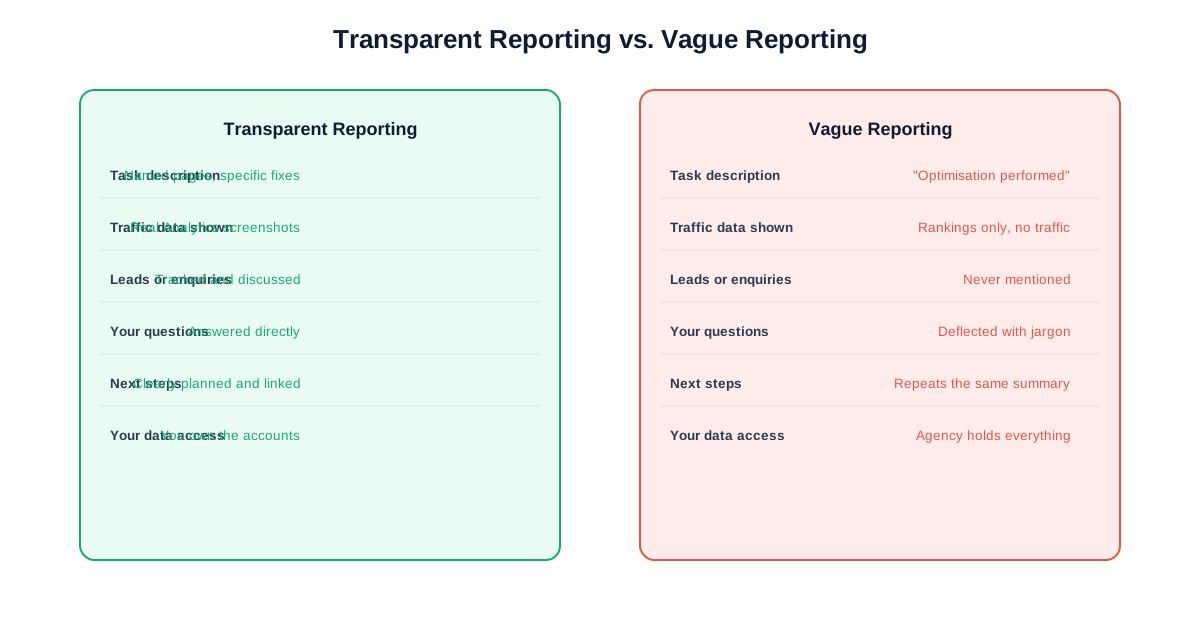
Most agencies sit somewhere on this spectrum rather than at either extreme — the goal is pushing firmly toward the left column.
If a report leaves you with more questions than answers, that's useful information in itself.

What This Says About the Relationship, Not Just the Reports
How an agency responds to being asked for more clarity tends to reveal more than the clarity itself. A partner confident in the quality of their work generally welcomes scrutiny, because scrutiny is simply an opportunity to demonstrate value they're already delivering. Defensiveness, delay tactics, or a sudden increase in technical jargon when a direct question is asked are all signals worth paying close attention to, regardless of how the actual report reads on paper.
Practical Steps to Take This Month
None of the steps below require confrontation. They simply require moving the relationship from passive trust to active, periodic verification, which is a reasonable standard for any ongoing paid service.
- Request a 20 to 30 minute review call instead of relying only on an emailed report.
- Bring your own Google Analytics and Search Console numbers to that call, and compare them against what's reported.
- Ask for specifics: which pages were edited, which content was published, which links were built, and when.
- Agree, going forward, on a reporting template that includes traffic, enquiries and tasks together, not rankings alone.
- If the answers remain vague after being asked directly twice, treat that as a decision point rather than a one-off.
Where the underlying work genuinely needs rebuilding, a structured SEO programme combined with a clear digital marketing plan gives you a documented baseline to measure every future report against, rather than starting the next engagement with the same blind trust as the last one.
A Step-by-Step Evaluation Checklist
- Pull the last three monthly reports and list, in one line each, what was actually done.
- Cross-check reported ranking improvements against your own Search Console impressions and clicks.
- Note whether enquiries or sales attributable to organic search have moved at all in that period.
- Write down three specific questions and send them before your next review call, so vague answers can't be improvised on the spot.
- Decide on a reasonable deadline — for example, the next full quarter — for reporting clarity to visibly improve.
Weighing the Cost and the Risk
Rather than guessing at a figure for "money wasted on unclear SEO," look at your own total spend over the engagement so far and ask what specific, documented outcomes that spend has produced. If the honest answer is "I'm not sure," that uncertainty is itself the real cost, regardless of the exact rupee amount, because it means you currently have no reliable way to judge whether continuing is a good decision or not.
There's also a practical risk in waiting too long to ask. The longer an unclear arrangement continues, the harder it becomes to reconstruct an accurate picture of what was and wasn't done, simply because old reports get harder to cross-reference against old Analytics data the further back you go. Raising the question this quarter is always easier than trying to audit two or three years of history after the fact.
How to Identify the Right Partner Going Forward
Transparency is one of the clearest, fastest filters available when evaluating any SEO provider, current or prospective. Our detailed guide on choosing the right SEO company in Thrissur and Kerala covers this in more depth, including the specific questions worth asking before you commit to anyone.
Gravity Innovative Solutions has worked with businesses across Thrissur and Kerala for over 13 years, and every client engagement includes clear monthly reporting tied to real traffic and enquiry data, not just ranking positions — because a client who understands what they're paying for tends to stay a client, and that's a better outcome for everyone involved.
Conclusion
You don't need to become an SEO expert to deserve a clear answer about what your money is doing each month. Your website should do more than simply exist online. It should build trust, attract the right audience and support your business goals, and the agency managing that work should be able to show you, in plain language, exactly how.
Related reading: Are You Wasting Money on SEO Companies That Promise First-Page Rankings but Deliver No Real Results? and 10 False Promises SEO Agencies Make That Could Cost Your Business Thousands